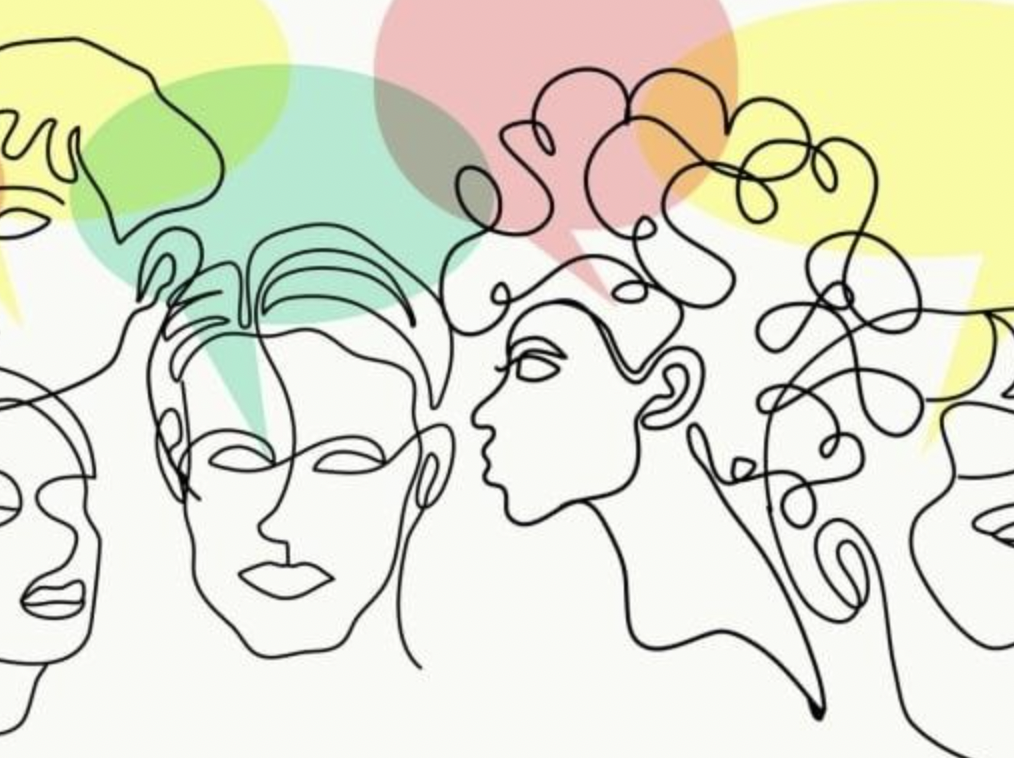
There’s a very specific kind of moment most people can recall. Meeting someone for the first time and, within seconds, feeling like you already “get” them. Maybe you felt they were warm, distant, confident, awkward, intimidating, whatever it was, the mind tends to land on a quick conclusion surprisingly fast.
What’s even more interesting is how sticky that first conclusion can be. Even after spending more time with the person, your brain often quietly holds onto that original impression in the background, adjusting it only slowly over time.
So the question becomes: how much of that first impression is actually accurate, and how much of it is just your brain doing what it’s designed to do?
Why your brain forms impressions almost instantly
First impressions are not a slow, thoughtful process. They happen in seconds, sometimes even milliseconds, before you’re consciously aware of it.
Research in social psychology shows that humans are incredibly fast at forming judgments based on facial expression, tone of voice, posture, and even small behavioural cues. The brain is constantly scanning for social information, trying to quickly categorise whether someone feels safe, trustworthy, dominant, friendly, or uncertain.
A big part of this happens automatically through systems like the amygdala, which helps process emotional and social signals rapidly. This is not “analysis” in the logical sense. It’s pattern recognition built from past experience, memory, and learned associations.
So when you meet someone, your brain isn’t carefully evaluating them. It is quickly sorting them into a familiar category based on fragments of information.
The “thin slice” effect, how little information we really use
One of the most well-known findings in this area comes from research on something called “thin slicing.” It refers to the brain’s ability to make surprisingly consistent judgments about people based on very brief observations.
Studies have shown that people can form impressions of traits like confidence, warmth, or competence from just a few seconds of behaviour. In some cases, these quick judgments can even show moderate accuracy when predicting certain stable traits.
But here’s the important part, accuracy depends heavily on what is being judged. People are better at picking up visible, stable traits like expressiveness or social behaviour, and much worse at understanding deeper traits like values, emotional depth, or long-term personality patterns.
So first impressions are not completely random, but they are also far from complete.
Why first impressions feel so certain (even when they’re incomplete)
One reason first impressions feel so convincing is because the brain dislikes uncertainty. When we meet someone new, there is a lot of unknown information. Instead of sitting with that uncertainty, the mind quickly fills in gaps using past experiences and assumptions.
This is known in psychology as “top-down processing,” where prior beliefs shape how new information is interpreted. If someone reminds you, even slightly, of a person you liked or disliked in the past, your brain may unconsciously transfer those feelings onto them.
This is also where biases begin to quietly influence perception. Things like appearance, tone, confidence, or even similarity to people you already know can heavily shape how someone is initially perceived, often without you realising it.
So what feels like a clear, objective read of someone is often a mix of real signals and mental shortcuts.
The halo effect and why one trait can shape everything
A major cognitive bias that influences first impressions is the halo effect. This happens when one positive trait, like attractiveness, confidence, or friendliness, influences how you perceive other unrelated traits.
For example, someone who seems confident might also be assumed to be more intelligent or capable, even without evidence. On the other hand, a slightly awkward first interaction might lead to an unfair assumption that someone is unfriendly or unapproachable.
Research consistently shows that these early impressions can significantly shape how we interpret later behaviour. Once a category is formed, the brain tends to interpret new information in a way that confirms it, rather than challenging it.
Why first impressions are hard to change
Even though we like to believe we are flexible in our judgments, first impressions tend to stick more than we expect. This is due to a cognitive tendency called confirmation bias, where the brain looks for information that supports its existing belief while downplaying information that contradicts it.
So if your initial impression of someone is that they are quiet or distant, you are more likely to notice moments that fit that narrative and overlook moments that don’t.
This doesn’t mean impressions can’t change, they absolutely can, but it usually takes repeated, consistent experiences that slowly override the original snapshot.
So how accurate are first impressions really?
The honest answer is: partially accurate, but heavily incomplete.
First impressions are often good at capturing surface-level traits. Things like expressiveness, social energy, or immediate behaviour can be picked up quite quickly and sometimes fairly accurately.
But they are far less reliable when it comes to deeper understanding. Things like emotional complexity, intentions, values, or long-term personality traits cannot be accurately assessed in seconds or even minutes.
In other words, first impressions are not wrong, they are just early drafts. Quick sketches rather than full portraits.
The part that changes how you see people (and yourself)
Once you understand how fast and automatic first impressions are, something shifts. You start to see them less as truths and more as initial interpretations your brain makes to reduce uncertainty.
That also makes you a bit more forgiving, not just toward others, but toward yourself too. Because the same system that judges people quickly is also constantly being judged by others in the same limited, incomplete way.
And most of the time, what people remember about a first meeting is not a perfectly accurate version of you, but a simplified impression shaped by a very short moment in time.
Which means there is always more room than you think for people, including you, to be understood beyond that first snapshot.