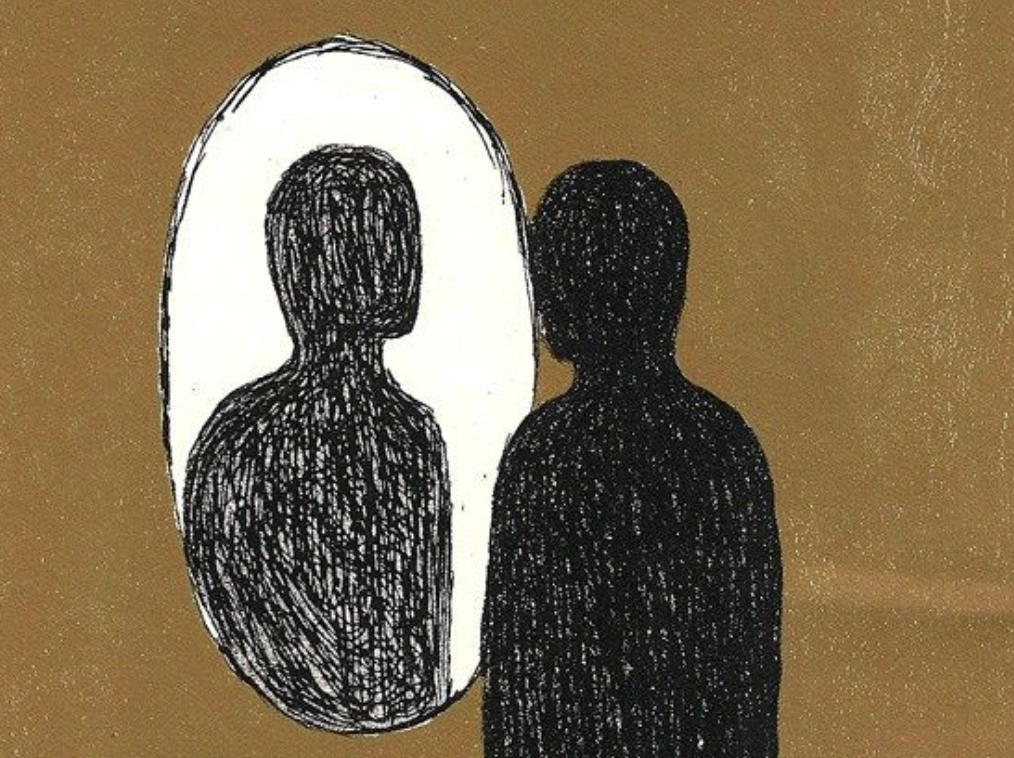
There’s a very specific kind of nostalgia that doesn’t just look back at your past, but actually reshapes it. It’s not always about missing a time or a place. Sometimes it’s missing a version of you. A younger you, a simpler you, a more confident or more carefree you, even if that version wasn’t actually as perfect as it feels in your memory.
What makes it interesting is how selective it is. Your mind doesn’t replay everything. It highlights certain moments, softens the edges of others, and slowly builds a version of the past that feels emotionally cleaner than it probably was.
Memory is not a recording, it’s a reconstruction
One of the most important things psychology has shown about memory is that it doesn’t work like a video playback. Every time you remember something, your brain is actually reconstructing it rather than retrieving it exactly as it happened.
Research in cognitive psychology has consistently found that memories are highly malleable. They are influenced by your current mood, your beliefs about yourself, and even what you’ve experienced since that moment. So the “past self” you remember is not a fixed entity. It’s something your brain is actively rebuilding in the present. This is why certain periods of your life can start to feel almost idealised over time. The memory isn’t just about what happened then, it’s also shaped by who you are now.
Why the past feels softer than it actually was
When you look back at a past version of yourself, your brain tends to filter out a lot of emotional noise. The stressful parts, the uncertainty, the self-doubt, they don’t always get the same emotional weight in hindsight.
Psychologists refer to this as a form of “rosy retrospection,” where people remember past events more positively than they experienced them in real time. It’s not intentional distortion. It’s partly because emotional intensity fades faster than the narrative of the experience itselfSo what remains is often a simplified version: the highlights, the feelings of meaning, the sense of identity you associate with that time. The discomfort that surrounded it tends to lose sharpness, which makes the past feel more appealing than it actually was while you were living it.
The brain prefers coherence over accuracy
Another reason your mind romanticizes past versions of yourself is because the brain likes stories that feel coherent. It tries to make sense of who you are by linking your past, present, and future into a continuous narrative.
The problem is that real life isn’t coherent. You change, you contradict yourself, you grow in uneven ways. But the mind still tries to smooth it out. So it picks certain versions of you and turns them into symbolic “chapters.” A time when you felt confident becomes “the confident version of me.” A time when you were more social becomes “when I was at my best.” The brain turns complex periods into identity markers because it’s easier to store meaning than detail.
Over time, these simplified identity snapshots can start to feel more real than the messy lived experience they came from.
Why current self feels less appealing in comparison
This is where it gets a bit tricky. When your brain romanticizes a past version of you, it’s often doing it in comparison with your present self, and that comparison is rarely fair. Right now, you’re more aware of your flaws, your responsibilities, your uncertainty. You see yourself with more clarity, which also means less illusion. But your past self is viewed through distance. You’re not remembering every doubt or mistake with equal intensity, so the comparison becomes uneven.
Psychology also shows something called “temporal self-comparison,” where people tend to judge their current self more critically than their past self because they are closer to ongoing struggles. The past feels resolved. The present doesn’t.
So the mind quietly builds this contrast: the past self feels lighter, while the current self feels more complicated. Not because it actually is worse, but because you are currently inside it.
The role of emotional states in shaping nostalgia
Your present emotional state has a strong influence on how you interpret your past. When people feel uncertain, stuck, or overwhelmed, they are more likely to idealise earlier versions of themselves. This is supported by research on mood-congruent memory, which shows that your current emotional state affects what you remember and how you interpret it. When you are low, your mind is more likely to retrieve emotionally positive memories from the past, but in a selective way that often excludes the challenges that came with them. So nostalgia is not just about the past. It’s also a reflection of what your present moment feels like.
Why the “past self” feels like a separate person
A subtle but important part of this experience is how your brain starts treating past versions of you almost like different people. You might think things like “I used to be more confident” or “I was happier back then,” as if that version of you existed independently.
This happens because of a psychological concept called “self-continuity,” which refers to how connected you feel to your past and future selves. When that connection feels weaker often during transitions, stress, or identity shifts, the past self starts to feel more distant and idealised. So instead of seeing your past as a continuous evolution, your mind splits it into versions, each carrying a certain emotional label.
What this actually means about you
The important part that often gets missed is that romanticizing your past self doesn’t necessarily mean your life was better then. It usually means your brain is trying to find emotional stability in something that feels familiar and complete.
The past feels appealing not because it was perfect, but because it is already finished. There is no uncertainty in it anymore. No unknown outcomes. No decisions waiting to be made.Meanwhile, your present self is still unfolding, which naturally feels more unstable and less “defined.” That contrast alone can make the past feel more attractive than it actually was.
The shift that slowly changes this pattern
Over time, something subtle tends to happen when you grow more aware of this process. You start noticing that the version of the past you idealise is incomplete. Not false, but incomplete. You remember more of the full picture again, not just the highlights, but also the confusion, the awkwardness, the moments you didn’t feel okay. And that creates a more balanced sense of continuity between who you were and who you are. The past stops being a place you compare yourself to, and starts becoming something you have simply moved through. And in that space, your present self stops feeling like a downgrade of an earlier version, and starts feeling like what it actually is, just another evolving point in the same ongoing story.