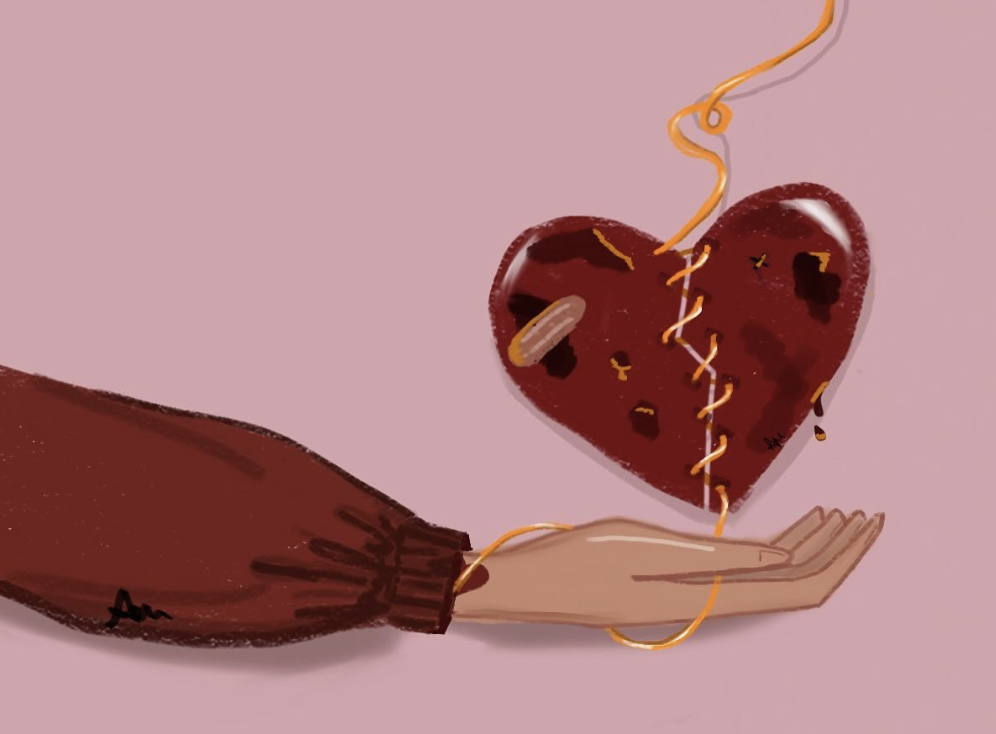
When emotional pain feels physical
Anyone who has gone through a breakup knows that the pain rarely feels purely emotional. It can feel heavy in the chest, like a tightening that makes breathing harder. Some people lose their appetite, others struggle to sleep, and many experience a deep, aching exhaustion that feels almost physical.
For a long time, heartbreak was described as metaphorical pain. But psychological and neuroscience research now suggests that the experience is far more literal than we once believed. The distress that follows a breakup activates many of the same brain systems that process physical pain.
In other words, heartbreak is not just “in your head.” Your brain and body react to it as if something physically harmful has happened.
The brain processes rejection like injury
One of the most striking findings in social neuroscience is that the brain does not treat social pain and physical pain as completely separate experiences.
Brain imaging studies have shown that when people experience intense social rejection, such as a breakup, areas of the brain associated with physical pain become active. Two regions in particular, the anterior cingulate cortex and the insula, play a role in both physical injury and emotional distress.
These areas help the brain detect and respond to threats. When a relationship ends, the brain interprets the loss of connection as a serious disruption to emotional safety. The resulting activation can produce sensations that feel very similar to physical pain.
Why the body reacts so strongly
Human beings are deeply wired for connection. For most of human history, close relationships were not just emotionally meaningful, they were essential for survival.
Being separated from a trusted partner or social group could have meant vulnerability, danger, or loss of support. Because of this evolutionary history, the brain treats the loss of a significant relationship as a serious signal.
When a breakup occurs, the brain responds by activating stress systems in the body. Stress hormones such as cortisol rise, heart rate may increase, and sleep patterns often become disrupted. These physiological responses can amplify the feeling that something in the body is genuinely hurting.
The role of attachment and bonding
Romantic relationships involve powerful bonding processes in the brain. Neurochemicals such as oxytocin and dopamine help create feelings of closeness, reward, and emotional safety.
Over time, the brain begins to associate a partner with comfort and stability. Their presence becomes part of the body’s emotional regulation system.
When a relationship ends, that system is suddenly disrupted. The brain loses a source of reassurance it had grown accustomed to. This sudden absence can trigger a reaction similar to withdrawal, which may explain why heartbreak can feel so overwhelming in the early stages.
Why memories can make the pain linger
After a breakup, memories of the relationship often appear unexpectedly. A familiar place, song, or routine can bring the past sharply into focus.
These reminders can reactivate the brain’s emotional circuits, briefly recreating the feelings associated with the relationship. Because the brain is still adjusting to the loss, these moments can intensify the sensation of pain.
Over time, however, the brain gradually learns to reinterpret these memories without triggering the same level of distress.
Healing is a biological process
Although heartbreak can feel intense, the brain is remarkably capable of adapting. As time passes, the neural pathways associated with the relationship become less dominant, and new emotional patterns begin to form.
Supportive relationships, meaningful activities, and emotional reflection all help the brain reorganise itself after loss. Gradually, the stress response settles and the body returns to a more balanced state.
This is why the pain of a breakup, though powerful, rarely lasts forever.
A reminder of how deeply we are wired to connect
The physical ache of heartbreak reveals something profound about the human mind. Our brains are designed to form bonds, and when those bonds break, the body reacts with genuine distress.
Rather than seeing heartbreak as weakness, it may be more accurate to see it as evidence of how deeply connection matters to us.
The pain of a breakup is not just emotional drama. It is the nervous system responding to the loss of something it once believed was essential for safety, belonging, and love.