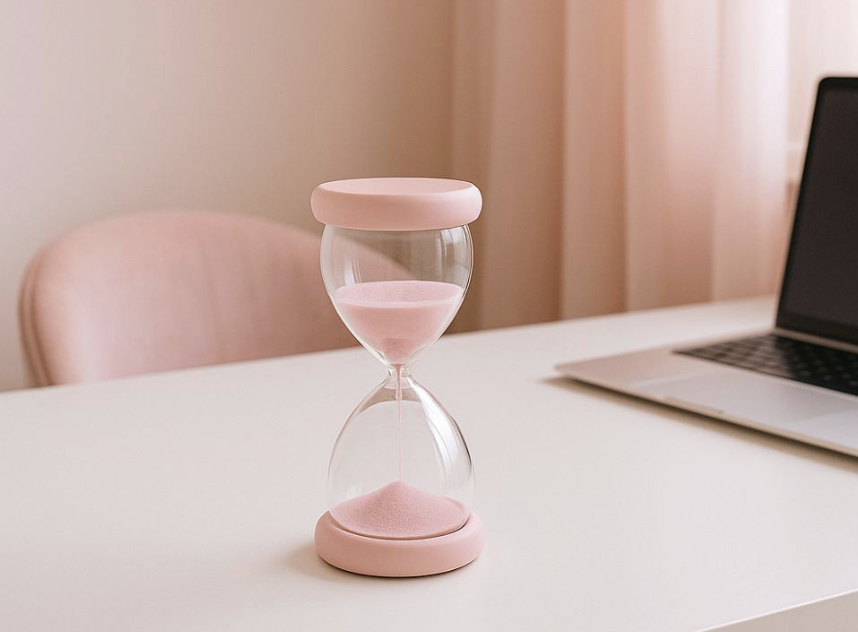
The strange way we experience time
There are moments when time seems to drag endlessly. Sitting in a waiting room, listening to a lecture that does not hold your attention, or standing in a long queue can make even a few minutes feel unusually long. You might glance at the clock expecting that a significant amount of time has passed, only to realise that barely a few minutes have moved forward.
Yet the opposite experience is just as familiar. An evening spent with close friends can pass so quickly that it feels as though it began only moments ago. A holiday or an engaging conversation seems to slip through your fingers before you fully notice it.
These contrasting experiences reveal something important about the mind. Time itself moves at a constant pace, but our experience of it is deeply psychological. The brain does not simply measure time like a clock. Instead, it interprets time based on attention, emotion, and the amount of mental activity happening in a given moment.
Attention shapes how long moments feel
One of the strongest influences on how we perceive time is where our attention is directed.
When we are bored, our attention often drifts toward the passage of time itself. We notice every minute that passes because there is little else competing for our focus. The brain begins to monitor time more closely, and this heightened awareness stretches the experience of each moment.
Psychologists sometimes refer to this as increased time monitoring. When the mind keeps checking how much time has passed, it naturally makes the experience feel longer.
In contrast, when we are engaged in something enjoyable or interesting, our attention shifts completely toward the activity itself. The brain becomes absorbed in what it is doing rather than in tracking the clock. Because time is no longer the focus of attention, it seems to pass quickly and almost unnoticed.
Engagement pulls the mind into the present
Enjoyable activities often involve a sense of deep involvement. When we are interested in something, whether it is a conversation, a creative project, or a game, the brain processes information continuously without pausing to check how much time has passed.
Psychologists sometimes describe this as a state of immersion. In these moments, the mind becomes fully occupied with the present experience. Thoughts about time fade into the background.
Only later, when the activity ends, do we suddenly realise how much time has passed. The hours feel as though they disappeared simply because our attention was never focused on measuring them.
Emotion also plays a role
Our emotional state also influences how time feels.
Positive experiences often involve the release of dopamine, a neurotransmitter linked to motivation, pleasure, and focus. Dopamine helps the brain remain engaged with what it is doing, making the experience feel smooth and absorbing.
When we are bored or under stimulated, dopamine activity tends to be lower. The brain begins searching for stimulation and novelty. This restlessness can make time feel heavy and slow, as if the moment is stretching longer than usual.
Emotion does not change the clock, but it changes the way the brain experiences each passing moment.
Why waiting can feel especially long
Few experiences illustrate this better than waiting. Waiting combines several elements that make time feel slow. There is often very little stimulation, limited control over the situation, and a strong awareness of the clock.
When we wait, the mind becomes hyper aware of time passing. Each minute feels noticeable because there is little else occupying attention. Without meaningful mental activity filling the moment, time becomes the main thing the brain observes.
This is why waiting for something uncertain, like exam results or an important message, can feel even longer than ordinary boredom. The emotional tension adds another layer of attention directed toward time.
Memory changes how time feels afterward
Interestingly, our perception of time can change depending on whether we are experiencing it in the moment or remembering it later.
Boring experiences often feel slow while they are happening because we are paying close attention to time. Yet when we look back on them later, they may seem short or even forgettable. This happens because they create very few distinct memories.
Enjoyable experiences work differently. While they feel fast in the moment, they often create many vivid memories. When we recall them later, they can feel rich and expansive, sometimes even longer than they actually were.
In other words, the brain measures time not only by duration, but by how many meaningful events occurred within that time.
What this reveals about the mind
The shifting speed of time tells us something important about human attention.
When the mind is under stimulated, it becomes aware of time itself. When the mind is absorbed in something meaningful, time fades into the background.
This simple shift in focus can transform the way a single hour feels.
The quiet lesson behind it
Although we cannot control the speed of time itself, we can influence how we experience it.
Activities that involve curiosity, creativity, conversation, or learning tend to draw the mind outward. They give the brain something to engage with, allowing moments to pass more lightly.
Perhaps this is why some days feel endlessly long while others seem to disappear almost instantly. The difference often lies not in the clock, but in how fully the mind is involved in what it is doing.
When attention is alive and present, time tends to move quietly in the background.