The Science of Déjà Vu
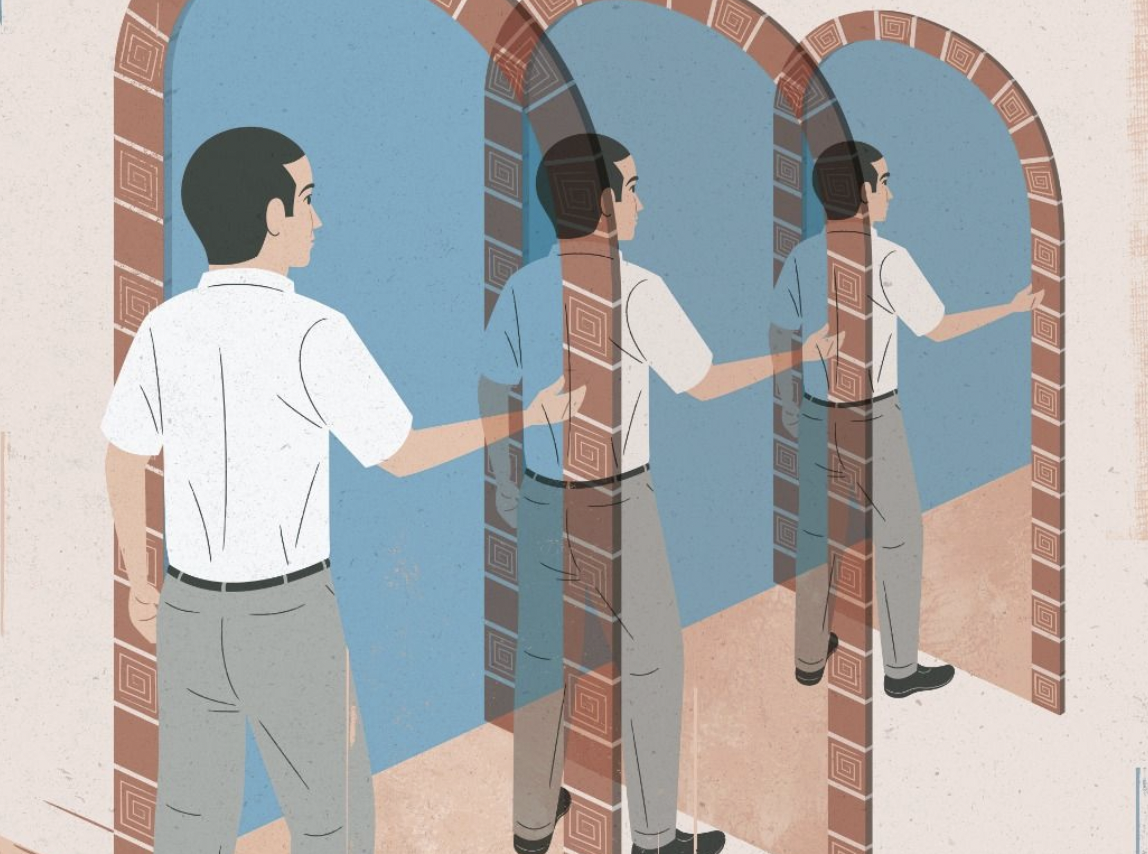
There is a very specific kind of moment most people have experienced at least once. You are somewhere ordinary, maybe walking into a room, talking to someone, or hearing a sentence, and suddenly you feel like this exact moment has happened before. Not similar. Not familiar. The exact same moment.
For a few seconds, it feels like you already know what is about to happen next. And then, just as quickly, the feeling disappears, leaving you slightly confused and wondering what just happened.
This strange experience is called déjà vu, and despite how mysterious it feels, psychologists and neuroscientists believe it is actually related to how memory works in the brain.
Your brain has two memory systems working at the same time
To understand déjà vu, it helps to understand that memory is not just one system. Psychologists often talk about two important processes involved in memory: familiarity and recollection.
Familiarity is the feeling that something is known or recognised, even if you cannot remember where you encountered it before. Recollection, on the other hand, is when you can actually remember details, where you were, when it happened, and what the situation was.
Normally, these two systems work together. When something feels familiar, you can usually connect it to a memory. But researchers believe that during déjà vu, the familiarity system activates without the recollection system. So your brain sends a signal that says, “This is familiar,” but it cannot find a memory to explain why.
That mismatch creates the strange feeling that the present moment has already happened before.
Déjà vu might be a small memory error
Some researchers believe déjà vu is essentially a memory processing error, but a harmless one. The brain is constantly trying to compare new experiences with past experiences to make sense of the world quickly. Sometimes, a new situation may look or feel similar to something you have experienced before, the layout of a room, the tone of a conversation, the lighting, the sequence of events.
Even if you do not consciously remember the original situation, your brain detects the similarity and produces a feeling of familiarity. Because you cannot identify the original memory, the feeling becomes confusing and feels like the present moment is repeating.
So in many cases, déjà vu may not be the present repeating itself, but the brain recognising a pattern from the past without telling you where it came from.
There may also be a tiny delay in brain processing
Another explanation suggested by neuroscientists is that déjà vu may happen because of a very small delay in how the brain processes information.
Imagine that information from your senses reaches one part of the brain a fraction of a second before another part. When the second part processes the same information, it may feel like it is seeing something again rather than for the first time.
The delay is extremely small, milliseconds, but the brain may interpret this as if the moment has already happened.
It is almost like the brain briefly processes the present twice, which creates the illusion of repetition.
What research says about déjà vu
Research shows that déjà vu is actually very common, especially among young adults. Studies have found that people between the ages of about 15 and 25 report experiencing it more frequently, and it tends to decrease with age.
Scientists have also found connections between déjà vu and the temporal lobe, a part of the brain involved in memory and recognition. In some neurological conditions like temporal lobe epilepsy, people experience very intense and frequent déjà vu, which has helped researchers understand which parts of the brain are involved in the sensation.
This does not mean déjà vu is dangerous or abnormal in healthy people. In fact, occasional déjà vu is considered completely normal and may simply reflect the complexity of the brain’s memory systems.
Why déjà vu feels so strange
What makes déjà vu unsettling is that the brain is usually very reliable when it tells us something is familiar. In everyday life, when something feels familiar, it usually is. So when the brain produces that strong familiarity signal without a real memory attached to it, it creates a kind of mental confusion.
For a moment, the brain is telling two different stories at the same time:
- This moment is new.
- This moment has already happened.
And the mind does not quite know which one to believe.
A small reminder of how complex the brain is
Déjà vu often feels mysterious, almost like time repeating itself or reality glitching. But most psychological explanations suggest something much simpler and more interesting: it is a small mismatch in how the brain processes memory, familiarity, and the present moment.
In a way, déjà vu is a reminder that our experience of reality is not a perfect recording of the world. It is something the brain is constantly constructing, interpreting, and sometimes getting slightly wrong.
And every once in a while, the brain briefly overlaps the present with the past, and for a few seconds, we feel like we have already lived a moment that is only just happening.